
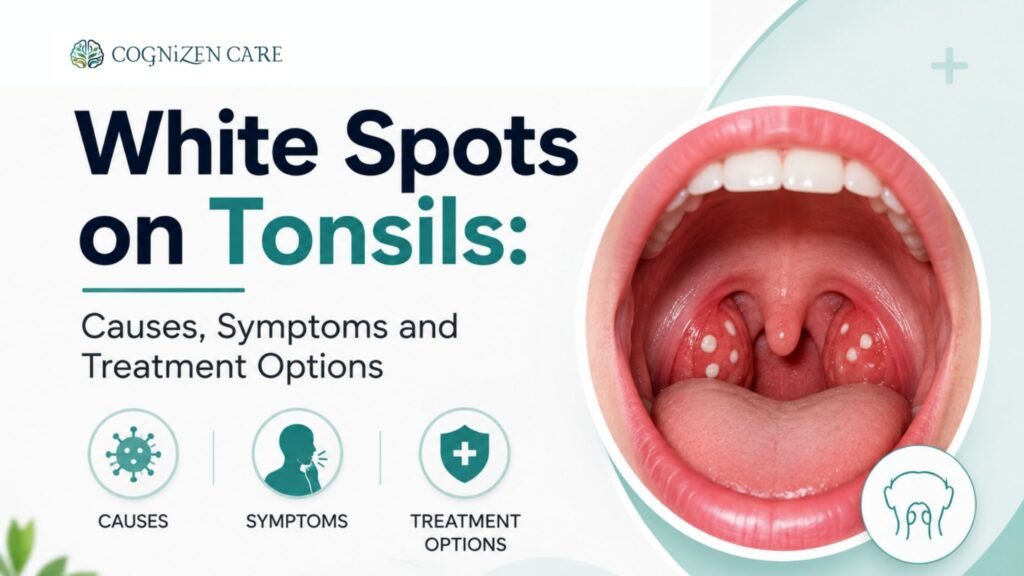
Have you looked in the mirror and noticed white spots on your tonsils? Don’t panic. White patches, dots, or a whitish coating on the tonsils can happen for several reasons. Sometimes it is a simple infection that settles within a few days. In other cases, the spots may be tonsil stones, a bacterial infection, or a sign that you need an ENT evaluation.
The important thing is this: white spots on tonsils do not automatically mean you need antibiotics. The right Tonsils Treatment depends on what is causing them.
Let’s understand the common causes, symptoms, treatment options, and warning signs in simple, practical terms.
What Do White Spots on Tonsils Mean?
White spots can appear when the tonsils become inflamed or when material collects inside the small folds of the tonsils.
Tonsillitis, for example, can cause red and swollen tonsils with white spots or a white, yellow, or grey coating. Both viruses and bacteria can cause tonsillitis. Viral infections are generally more common, while Group A Streptococcus is an important bacterial cause.
Another common possibility is a tonsil stone. These are small, hard deposits that form when food particles, bacteria, and other debris become trapped in the tonsil’s natural pockets, called crypts. They often look like tiny white or yellow pebbles.
So, simply seeing a white spot isn’t enough to identify the problem.
1. Tonsillitis
Tonsillitis is one of the most common reasons for white patches on the tonsils.
Along with white spots, you may notice a sore throat, painful swallowing, swollen tonsils, fever, bad breath, and swollen glands in the neck. Children may also develop stomach pain or vomiting.
Most tonsillitis cases are caused by viruses, including viruses responsible for common respiratory infections. Bacterial infections can also cause tonsillitis, particularly Group A Streptococcus.
What is the treatment?
If the infection is viral, treatment is usually focused on relieving symptoms. Rest, fluids, warm salt-water gargles, and appropriate pain-relieving medicines may help.
If a bacterial infection is confirmed or strongly suspected, a doctor may prescribe antibiotics. Taking antibiotics without proper evaluation is not recommended because antibiotics do not treat viral infections.
2. Strep Throat
A sudden, painful sore throat with fever and swollen tonsils can sometimes be caused by strep throat.
Strep throat is caused by Group A Streptococcus bacteria. White patches or streaks may appear on the tonsils, but their presence alone cannot confirm strep throat. Other clues can include painful swallowing, tender neck lymph nodes, and tiny red spots on the roof of the mouth.
Interestingly, cough and runny nose are more commonly associated with viral infections than classic strep throat.
If strep throat is suspected, a healthcare professional may recommend testing rather than simply judging the tonsils by appearance.
Why does diagnosis matter?
Untreated Group A strep infection can occasionally lead to complications, including rheumatic fever and kidney inflammation. Appropriate antibiotic treatment helps reduce these risks.
3. Tonsil Stones
Not every white spot is an infection.
Tonsil stones, medically called tonsilloliths, are small deposits that develop inside the crypts or pockets of the tonsils. They contain trapped debris and microorganisms that gradually harden.
The biggest clue is often bad breath without a major fever or severe sore throat.
Some people also experience a bad taste, mild throat irritation, cough, ear discomfort, or a feeling that something is stuck in the throat.
Tonsil stones are usually harmless. Small stones may fall out on their own, while persistent or uncomfortable stones can be evaluated and removed by a healthcare professional.
4. Viral Throat Infections
A viral infection can make the tonsils red, swollen, and sometimes covered with white patches.
If you also have cough, runny nose, hoarseness, nasal congestion, or other cold-like symptoms, a viral cause becomes more likely.
Most viral tonsillitis improves with supportive care rather than antibiotics.
This is one reason self-starting antibiotics is not a good idea.
5. Post-Nasal Drip and Allergies
Sometimes what looks like a throat infection may actually be irritation caused by mucus draining from the nose.
Allergies, sinus problems, colds, and other conditions can cause post-nasal drip. The constant mucus irritation can make the back of the throat look inflamed and uncomfortable.
If white spots keep appearing along with nasal blockage, sneezing, allergy symptoms, or frequent throat clearing, the nose and sinuses may need to be evaluated as well.
Symptoms That Can Come With White Spots
The symptoms depend heavily on the underlying cause.
You may experience:
- Sore throat
- Pain while swallowing
- Red or swollen tonsils
- Fever
- Bad breath
- Swollen neck glands
- Tonsil stones
- Ear discomfort
- Cough
- Runny or blocked nose
- Fatigue
A combination of symptoms is much more useful than the appearance of the tonsils alone.
How Are White Spots on Tonsils Diagnosed?
An ENT specialist usually begins with a simple examination of the mouth and throat.
The doctor will look at the tonsils, check for swelling or pus-like patches, examine the neck lymph nodes, and ask about fever, pain, cough, breathing problems, and previous throat infections.
If a bacterial infection such as strep is suspected, testing may be required.
For recurring tonsil problems, the doctor may also review your history of infections, tonsil stones, snoring, sleep problems, or difficulty swallowing.
The goal is not simply to remove the white spots. The goal is to identify why they appeared in the first place.
Tonsils Treatment: What Actually Works?
The best Tonsils Treatment depends on the diagnosis.
For Viral Tonsillitis
Viral infections usually improve with supportive care.
Drink plenty of fluids, take adequate rest, and choose soft foods if swallowing hurts. Warm salt-water gargles may provide temporary throat comfort.
Pain or fever medicines may also be recommended when appropriate.
For Bacterial Tonsillitis
If testing or clinical evaluation indicates a bacterial infection, your doctor may prescribe antibiotics.
Complete the prescribed course rather than stopping treatment as soon as you feel better.
For Tonsil Stones
Small, symptom-free tonsil stones may not require treatment.
Good oral hygiene, brushing the tongue, staying hydrated, and gargling with salt water can help reduce debris accumulation. Persistent or troublesome stones can be removed professionally.
For Recurrent Tonsillitis
If tonsillitis keeps coming back and significantly affects your daily life, an ENT specialist may discuss tonsillectomy, or surgical removal of the tonsils.
Surgery is not automatically required just because someone has white spots. It is considered based on the overall history, severity, recurrence, and impact of the condition.
Can You Remove White Spots at Home?
This is where many people make a mistake.
Do not aggressively scrape your tonsils with a spoon, fingernail, toothbrush, or other sharp object.
The tonsils are delicate and can bleed or become injured.
If you think you have a tonsil stone, gentle gargling may help in some cases. But if the spot doesn’t come away easily, is painful, keeps returning, or is accompanied by significant symptoms, get it checked rather than repeatedly trying to remove it yourself.
When Should You See an ENT Specialist?
A white spot that appears during a mild cold may not be an emergency. But certain symptoms deserve professional attention.
See an ENT specialist if you have:
- Repeated white patches on the tonsils
- Frequent tonsillitis
- Severe throat pain
- High or persistent fever
- Difficulty swallowing
- Recurrent tonsil stones
- Persistent bad breath
- Enlarged tonsils affecting sleep
- Symptoms that are getting worse instead of better
A persistent one-sided tonsil enlargement, unexplained neck lump, or ongoing throat symptoms should also be evaluated rather than ignored. Rarely, persistent tonsil changes can be associated with more serious conditions.
Emergency Warning Signs
Some throat symptoms require urgent medical attention.
Seek urgent care if you have difficulty breathing, severe difficulty swallowing, excessive drooling, rapidly increasing throat swelling, or difficulty opening your mouth.
A peritonsillar abscess, for example, can cause severe throat pain, swollen tonsils, difficulty opening the mouth, and swallowing problems. It often requires drainage and antibiotics rather than home treatment.
Don’t wait for home remedies to work if breathing or swallowing is becoming difficult.
How Can You Prevent Tonsil Problems?
You cannot prevent every throat infection, but everyday habits can reduce your risk.
Wash your hands regularly, especially during cold and flu seasons.
Avoid sharing bottles, glasses, spoons, and other personal items with someone who has an active throat infection.
Maintain good oral hygiene by brushing twice daily and cleaning your tongue.
Stay adequately hydrated.
If you frequently develop tonsil stones, good oral hygiene and regular hydration may help reduce debris buildup.
If you have allergies or chronic sinus problems, managing those conditions can also reduce ongoing throat irritation.
The Bottom Line
White spots on tonsils can have several causes, and the appearance alone doesn’t tell you which one you have. Tonsillitis, strep throat, tonsil stones, and irritation related to nasal or throat conditions can all look different—and sometimes surprisingly similar.
The right Tonsils Treatment starts with finding the cause.
If the spots are accompanied by severe pain, fever, difficulty swallowing, repeated infections, or breathing problems, don’t rely only on home remedies. An ENT evaluation can help determine whether you need supportive care, testing, medication, professional tonsil-stone removal, or further treatment.
Expert ENT Care at COGNiZEN CARE
If you or your child has recurring white spots on the tonsils, frequent tonsillitis, tonsil stones, sore throat, or difficulty swallowing, Dr. Ayushi, ENT Specialist in Gurgaon, can evaluate the underlying cause and recommend an appropriate treatment plan at COGNiZEN CARE.
The focus should not simply be on getting rid of the white spots—it should be on understanding why they are appearing and how to prevent the problem from returning.
