
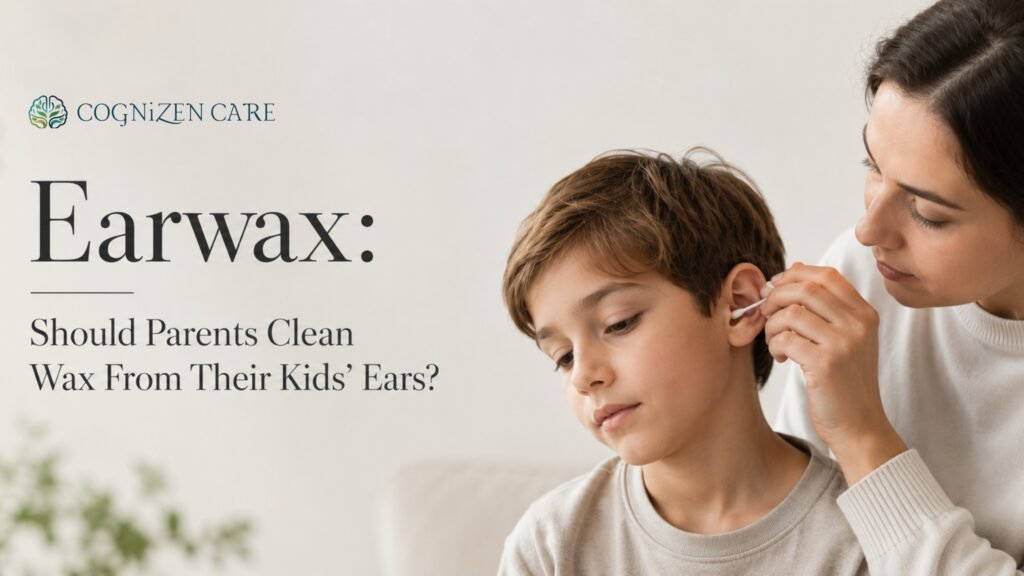
Earwax is something many parents worry about when caring for their children. Seeing wax inside a child’s ear often creates concern, and many parents immediately try to clean it using cotton buds, earbuds, or home remedies. But is it really necessary?
The truth is that earwax is usually normal and healthy. In most cases, the ear cleans itself naturally without needing external cleaning. However, improper cleaning methods can sometimes do more harm than good.
Understanding how earwax works and when professional care is needed can help parents protect their child’s ear health safely.
What Is Earwax?
Earwax, also called cerumen, is a natural substance produced inside the ear canal. It may look yellow, orange, or brown depending on the child’s age and ear condition.
Many people think earwax is dirty, but it actually protects the ears.
Earwax helps trap dust, bacteria, and small particles before they reach deeper parts of the ear. It also keeps the ear canal moisturised and prevents irritation.
Without earwax, the ears would become dry, itchy, and more vulnerable to infections.
Do Kids Need Their Earwax Removed Regularly?
In most cases, children do not need regular earwax cleaning.
The ear has a natural self-cleaning system. As the jaw moves during talking or chewing, old wax slowly moves outward and falls away naturally.
This means most children never require manual wax removal.
Parents often try to clean wax because they believe visible wax means poor hygiene. But visible earwax is usually completely normal.
Cleaning ears too frequently may actually disturb the ear’s natural protective barrier.
Why Cotton Buds Are Not Safe

One of the biggest mistakes parents make is using cotton buds to clean their child’s ears.
Although cotton buds appear harmless, they often push earwax deeper into the ear canal instead of removing it.
This can cause blockage, pain, reduced hearing, or irritation.
In some cases, inserting objects into the ear may even injure the ear canal or damage the eardrum.
ENT specialists strongly advise against placing anything inside the ear canal, especially for children.
A simple rule parents should remember is:
“Never put anything smaller than your elbow inside your child’s ear.”
Signs That Earwax May Be a Problem
While earwax is usually harmless, excessive buildup can sometimes cause symptoms.
Parents should watch for signs such as:
- Difficulty hearing
- Complaints of blocked ears
- Ear pain or discomfort
- Ringing sounds in the ear
- Frequent touching or pulling of the ears
- Balance problems in rare cases
Sometimes children may struggle to hear instructions at school or frequently ask others to repeat themselves due to wax blockage.
If these symptoms appear, professional evaluation may be necessary.
Can Earwax Cause Hearing Problems?

Yes, excessive earwax can temporarily affect hearing.
When wax becomes impacted, it blocks sound from travelling properly through the ear canal. This may create a feeling of muffled hearing or fullness in the ear.
Fortunately, hearing usually improves once the blockage is safely removed.
However, parents should avoid trying to remove impacted wax at home, especially using sharp objects or ear candles.
Professional ear cleaning is always safer for children.
Home Remedies Parents Should Avoid
The internet is full of home remedies for earwax removal, but many of them are unsafe for kids.
Parents should avoid:
- Cotton buds
- Hairpins or clips
- Ear candles
- Sharp objects
- Excessive oil drops without medical advice
Ear candling, in particular, is not recommended by ENT doctors because it can cause burns and injuries without effectively removing wax.
Even over-the-counter drops should only be used after proper medical guidance.
Safe Ways to Care for Your Child’s Ears
The safest approach is usually the simplest one — leave the ears alone unless symptoms develop.
Parents can gently clean the outer ear using a soft cloth during bathing. There is no need to clean deep inside the ear canal.
If wax becomes visible near the outer opening, it can usually be wiped away carefully without inserting anything inside.
Good ear hygiene does not mean removing all earwax. Healthy ears naturally contain some wax.
When Should Parents Visit an ENT Specialist?
Parents should consult an ENT specialist if:
- Earwax causes hearing difficulty
- The child complains of pain
- There is discharge from the ear
- Wax repeatedly builds up
- The child has speech or hearing concerns
A professional ENT evaluation helps determine whether symptoms are truly related to earwax or another ear condition.
Sometimes infections, allergies, or fluid buildup may mimic wax-related symptoms.
Early diagnosis is especially important in children because hearing issues can affect speech development and learning.
How ENT Doctors Remove Earwax Safely
ENT specialists use safe and specialised methods to remove impacted earwax.
This may include:
- Microsuction
- Gentle irrigation
- Specialized instruments under visualization
These procedures are usually quick, safe, and comfortable when performed by trained professionals.
Unlike home cleaning methods, ENT-guided wax removal minimises the risk of injury or infection.
Why Children Produce Different Amounts of Earwax
Some children naturally produce more earwax than others.
Factors like genetics, narrow ear canals, allergies, and frequent earbud or headphone use can affect wax buildup.
This does not always indicate a medical problem.
Parents should focus more on symptoms rather than the amount of visible wax.
The Link Between Earbuds and Earwax
Modern children and teenagers frequently use earbuds and headphones.
Prolonged earbud use can sometimes push earwax deeper into the ear canal and increase the risk.
It may also trap moisture inside the ear, increasing irritation and infection risk.
Encouraging moderate earbud use and proper hygiene can help maintain healthy ears.
Why Professional Advice Matters
Children’s ears are delicate and sensitive. Small mistakes during cleaning can lead to pain, infections, or hearing problems.
Many parents unintentionally worsen the wax blockage while trying to help their child.
This is why ENT specialists recommend avoiding self-cleaning methods and seeking professional care when symptoms appear.
Final Thoughts
Earwax is a natural and protective part of healthy ears. In most children, it does not need to be removed regularly.
The safest approach for parents is to avoid inserting objects into the ear canal and allow the ears to clean themselves naturally.
If symptoms like hearing difficulty, discomfort, or repeated blockage occur, professional evaluation becomes important.

At Dr Ayushi ENT Clinic, parents receive expert guidance and safe treatment for children’s ear-related concerns. From earwax blockage and ear infections to hearing evaluations, Dr Ayushi focuses on gentle, child-friendly care to protect your child’s hearing health and overall well-being.