
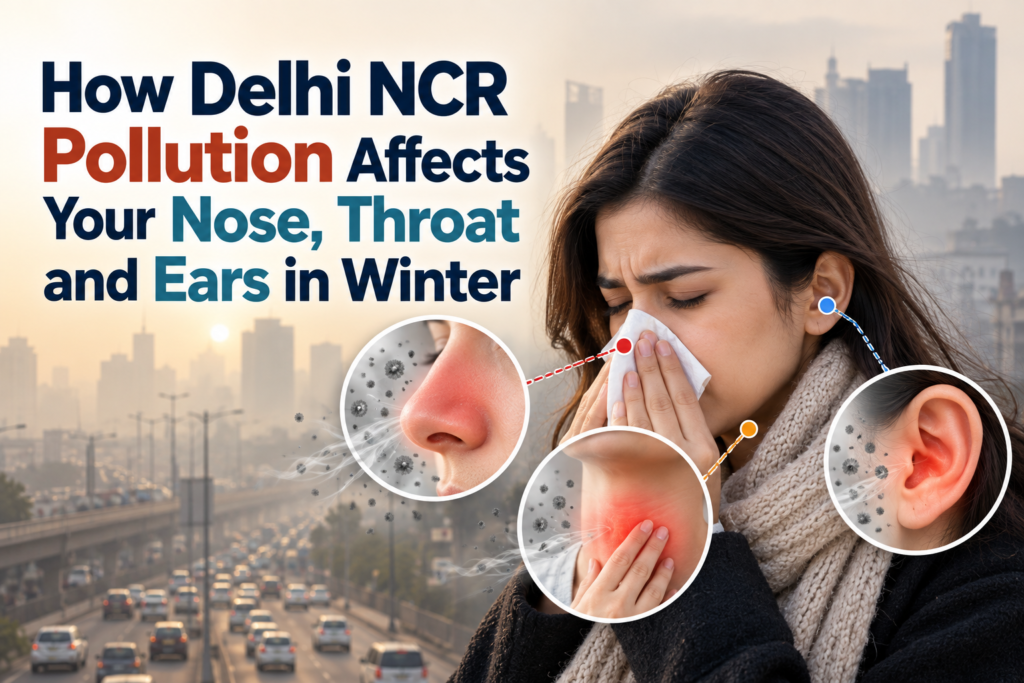
Winter in Delhi NCR often brings a familiar combination of cold mornings, fog, smog and poor air quality. While most people associate Delhi NCR Pollution with breathing problems and lung health, polluted air can also affect the upper respiratory system—including the nose, throat and ears.
Fine particles and gases in polluted air can irritate the lining of the nose and throat, worsen existing allergies and respiratory conditions, and contribute to inflammation. Research from Delhi has also found that respiratory symptoms and hospital visits tend to increase during periods of higher pollution, particularly in winter.
This does not mean every blocked nose, sore throat or ear problem during winter is caused by pollution. Cold weather, viral infections, allergies, indoor heating, dust and infections can all contribute. However, Delhi NCR Pollution can make these problems more noticeable or difficult to manage, especially when exposure continues for days or weeks.
Why Does Delhi NCR Pollution Become a Bigger Concern in Winter?
Delhi NCR experiences several conditions during winter that can contribute to the accumulation of pollutants near ground level. Weak winds and a shallow atmospheric boundary layer can reduce dispersion, allowing particulate matter and other pollutants to remain concentrated near where people live and travel. Research conducted during a Delhi winter campaign documented persistent smog along with high particulate pollution.
The pollutants of particular health concern include PM10, PM2.5, nitrogen dioxide, sulphur dioxide, ozone and other components of polluted air. PM10 can irritate the eyes, nose and throat, while the much smaller PM2.5 particles can travel deeper into the respiratory system.
For someone commuting outdoors every day, spending time near traffic or exercising outside during periods of poor air quality, the cumulative exposure can become significant.
How Delhi NCR Pollution Affects Your Nose
Your nose is one of the first parts of the respiratory system to come into contact with polluted air. Normally, nasal mucus and tiny hairs help trap particles before they travel deeper into the respiratory tract. Heavy pollution can place additional stress on this protective system.
1. Nasal irritation and dryness
Polluted air can irritate the nasal lining, leading to symptoms such as:
- Burning or irritation inside the nose
- Dryness
- Frequent sneezing
- Runny nose
- Nasal blockage
- Increased mucus
- Nose discomfort
People who already have allergic rhinitis or sensitive nasal passages may notice these symptoms more strongly.
2. Worsening of allergies
Pollution does not necessarily cause every allergy, but it can irritate the nasal passages and make existing allergic symptoms more difficult to control.
You may notice more sneezing, congestion, watery eyes or postnasal drip on heavily polluted days.
If nasal blockage continues for weeks, it is important not to assume that pollution is the only cause. Allergic rhinitis, sinusitis, a deviated nasal septum and other conditions can produce similar symptoms.
3. Sinus symptoms
When the nose becomes swollen and congested, normal mucus drainage can become difficult. Some people may consequently experience facial pressure, headache, nasal discharge or a blocked feeling around the sinuses.
Persistent symptoms should be evaluated by an ENT specialist rather than treated repeatedly with over-the-counter medicines.
How Delhi NCR Pollution Affects Your Throat
The throat is another area directly exposed to inhaled pollutants.
A Delhi environmental health study reported that sore throat was more common among Delhi residents than the comparison group and that its prevalence was highest during winter, when ambient pollution levels were also higher. This type of research shows an association; it does not mean pollution is the sole cause of sore throat in every individual.
Common throat symptoms during polluted winter days
You may experience:
- Dry or scratchy throat
- Burning sensation
- Frequent throat clearing
- Mild cough
- Hoarseness
- Increased mucus
- Feeling of irritation while swallowing
People who already have asthma, allergies or other respiratory conditions may be more sensitive to particulate pollution. The CDC notes that particle pollution can irritate the nose and throat and can worsen symptoms in susceptible people.
It is also important to distinguish pollution-related irritation from an infection. Fever, significant throat pain, swollen glands, pus on the tonsils or worsening symptoms may indicate an infection requiring medical assessment.
Can Delhi NCR Pollution Affect Your Ears?
The connection between air pollution and ear health is more complicated than its effect on the nose and throat.
Recent research reviews suggest that environmental pollution and meteorological conditions may influence some ear and nose diseases, including conditions involving the middle ear. However, the evidence is still developing, and pollution should not be considered the direct cause of every ear problem.
1. Ear pressure and blocked-ear sensation
When nasal congestion occurs because of allergies, infections or irritation, the Eustachian tube, which helps equalise pressure between the middle ear and the surrounding environment, may not function normally.
This can sometimes create:
- Ear fullness
- Popping sensations
- Mild pressure
- Temporary muffled hearing
In many cases, the problem is related more directly to nasal congestion or an upper respiratory infection than to pollution itself.
2. Existing ear conditions may become more troublesome
People with recurrent middle-ear problems, allergies or chronic nasal congestion may notice worsening symptoms during periods when their upper respiratory symptoms increase.
If ear pain, discharge, hearing loss or persistent pressure develops, an ENT examination is advisable.
Who Should Be More Careful?
Everyone can experience irritation from polluted air, but certain people may be more vulnerable to health effects from air pollution. These include:
- Children
- Older adults
- People with asthma or chronic respiratory disease
- People with allergies
- Individuals with existing ENT conditions
- People who spend many hours outdoors
- Outdoor workers
- People who exercise outdoors during poor air-quality periods
WHO also identifies children, older adults and people with chronic diseases among groups at greater risk from air-pollution exposure.
Practical Ways to Protect Your Nose, Throat and Ears
You cannot completely control outdoor air quality, but you can reduce your personal exposure.
Check air quality before outdoor activities
If air quality is particularly poor, consider reducing unnecessary outdoor exposure and shifting outdoor exercise to a cleaner indoor environment.
Use a properly fitting mask outdoors
A well-fitting particulate-filtering mask can reduce inhalation of fine particles. Fit matters because gaps around the face can allow polluted air to enter.
Keep indoor air cleaner
Keep windows and doors closed when outdoor pollution is very high, where practical. Avoid adding indoor pollution through cigarette smoke, incense, unnecessary burning or poorly ventilated cooking.
Stay hydrated
Adequate fluid intake can help prevent excessive dryness and make throat and nasal secretions less uncomfortable. It does not, however, remove pollution particles from the body.
Do not repeatedly self-medicate
Using antibiotics for every sore throat or using nasal decongestant sprays for prolonged periods without medical guidance can create additional problems. Treatment should depend on the actual cause.
Avoid inserting cotton buds into your ears
Pollution-related irritation does not mean that earwax needs to be removed aggressively. Cotton buds can push wax deeper or injure the ear canal.
When Should You See an ENT Specialist?
Pollution-related irritation often improves when exposure decreases. However, persistent or severe symptoms should not simply be blamed on Delhi NCR Pollution.
Consult an ENT specialist if you have:
- Persistent nasal blockage
- Repeated sinus symptoms
- Sore throat that does not improve
- Persistent hoarseness
- Recurrent ear infections
- Ear discharge
- New or worsening hearing loss
- Persistent ear pressure
- Severe facial pain or swelling
- Difficulty breathing or swallowing
Sudden hearing loss, severe breathing difficulty or rapidly worsening symptoms require prompt medical attention.

Final Thoughts
Winter pollution in Delhi NCR is not only a lung-health concern. Delhi NCR Pollution can irritate the nose and throat and may indirectly contribute to ear-related symptoms by worsening nasal congestion and upper-airway problems. Research from Delhi and broader health evidence supports the importance of reducing exposure to particulate pollution, particularly during periods of poor air quality.
At the same time, not every ENT symptom during winter is caused by pollution. Viral infections, allergies, sinus disease, cold weather and existing ENT conditions can produce similar complaints.
If symptoms keep returning every winter or continue despite reducing pollution exposure, a proper ENT evaluation can help identify the actual cause and guide appropriate treatment.
For persistent nose, throat or ear problems during Delhi NCR winters, consult COGNiZEN CARE and Dr. Ayushi, ENT Specialist in Gurgaon, for an appropriate evaluation and personalised treatment plan.
Frequently Asked Questions
Can pollution cause a blocked nose?
Polluted air can irritate the nasal lining and worsen congestion, particularly in people with allergies or sensitive airways. Persistent blockage should be evaluated to rule out other causes.
Can pollution cause sore throat?
Yes, particulate pollution can irritate the throat and may contribute to dryness, scratchiness and discomfort. However, infections and allergies are also common causes of sore throat.
Can pollution cause hearing loss?
Pollution is not considered a straightforward direct cause of ordinary hearing loss. However, environmental factors and pollution may influence some ear conditions, while nasal congestion can sometimes contribute to temporary ear pressure or muffled hearing.
Should I see an ENT doctor for pollution-related symptoms?
If symptoms are persistent, recurrent, severe or associated with hearing loss, ear discharge, significant throat problems or persistent nasal blockage, an ENT assessment is appropriate.
Is winter the worst season for Delhi air pollution?
Delhi commonly experiences high particulate pollution during the post-monsoon and winter periods, although pollution levels vary from day to day and from year to year. Research has documented particularly high particulate exposure during winter conditions in Delhi.