
Breathing through your nose should feel natural. But if you constantly have one blocked nostril, frequent sinus infections, loud snoring, or difficulty breathing, the problem may not be allergies or a common cold. In many cases, the real reason is a deviated nasal septum.
A deviated septum can make everyday life uncomfortable. It can affect your sleep, reduce your exercise capacity, increase sinus infections, and even lead to headaches. Fortunately, modern Septoplasty Surgery offers a safe and effective solution.
Many people worry when they hear the word “surgery.” However, septoplasty is one of the most commonly performed ENT procedures and has helped thousands of patients breathe comfortably again.
In this guide, we’ll explain everything you need to know about Septoplasty Surgery, including who needs it, how it’s performed, what recovery is like, its benefits, possible risks, and tips for a smooth recovery.
What Is Septoplasty Surgery?
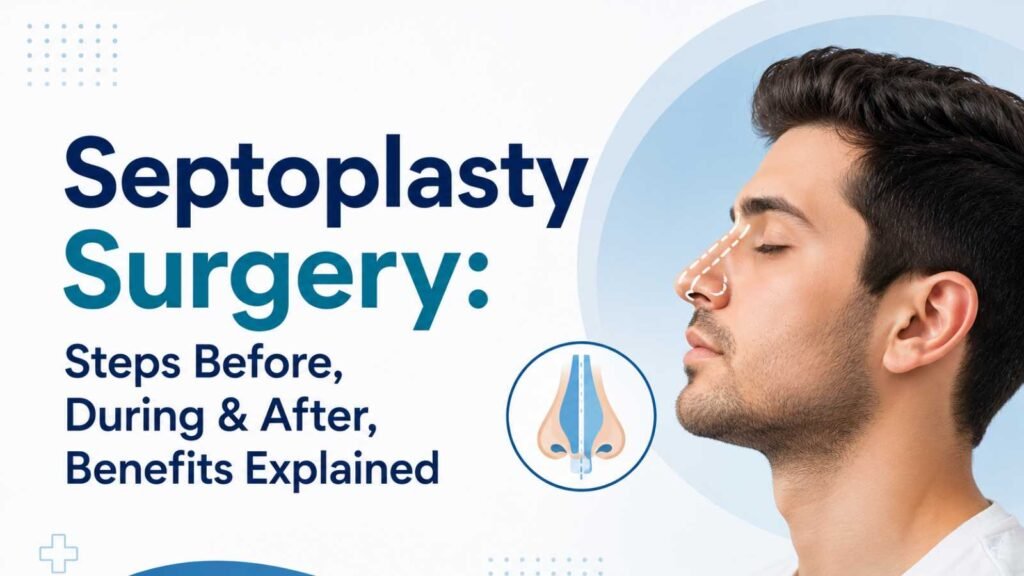
Septoplasty Surgery is a procedure performed to straighten the nasal septum—the thin wall made of bone and cartilage that separates the two nostrils.
Ideally, the septum should be in the centre of the nose. However, many people have a septum that is bent or deviated.
A severely deviated septum can block airflow, making it difficult to breathe properly.
During septoplasty, the ENT surgeon reshapes or removes the portions of cartilage and bone causing the blockage. The goal is to improve airflow while preserving the natural structure of the nose.
Unlike cosmetic nose surgery (rhinoplasty), septoplasty is performed to improve nasal function rather than appearance.
When Do You Need Septoplasty Surgery?
Not every deviated septum requires surgery.
Many people have a slightly bent septum without experiencing any symptoms.
However, Septoplasty Surgery may be recommended if you have:
- Constant nasal blockage
- Difficulty breathing through one or both nostrils
- Frequent sinus infections
- Snoring or sleep disturbances
- Recurrent nosebleeds
- Persistent facial pressure
- Mouth breathing during sleep
- Reduced quality of life despite medication
If medicines, nasal sprays, or allergy treatment no longer provide relief, surgery may be the most effective long-term solution.
What Causes a Deviated Septum?
A deviated septum may develop due to several reasons.
Some people are born with it.
Others develop it after a sports injury, road accident, or fall.
In some individuals, the deviation gradually worsens as they grow older.
Regardless of the cause, the symptoms can significantly affect daily comfort and breathing.
Before Septoplasty Surgery
Proper preparation helps ensure a smooth surgery and recovery.
Your ENT specialist will first perform a detailed examination of your nose using a nasal endoscope.
You may also require imaging tests if chronic sinus problems are present.
Before surgery, your doctor will discuss:
- Your symptoms
- Current medications
- Medical history
- Previous nasal surgeries
- Allergies
You may be advised to stop blood-thinning medications a few days before surgery.
Smoking should also be avoided because it delays healing.
Patients are usually instructed not to eat or drink for several hours before the procedure if general anaesthesia is planned.
What Happens During Septoplasty Surgery?
One of the biggest concerns patients have is what actually happens during surgery.
The good news is that Septoplasty Surgery is a minimally invasive procedure.
It is performed completely through the nostrils, meaning there are usually no visible cuts or external scars.
After administering anaesthesia, the surgeon gently lifts the lining covering the septum.
The bent portions of cartilage and bone are carefully reshaped or removed.
Once the septum is straightened, the lining is placed back into position.
The entire procedure usually takes between 30 and 90 minutes, depending on the complexity of the case.
Most patients return home on the same day.
What to Expect After Septoplasty Surgery
Recovery after Septoplasty Surgery is generally straightforward.
For the first few days, patients may experience:
- Mild nasal congestion
- Slight bleeding
- Swelling
- Pressure inside the nose
These symptoms gradually improve.
Since the inside of the nose is healing, breathing may initially feel blocked.
This is temporary and improves as swelling decreases.
Pain is usually mild and can be controlled with prescribed medication.
Most patients return to office work within a week.
However, strenuous exercise should be avoided for two to three weeks.
Benefits of Septoplasty Surgery
One of the main reasons patients choose Septoplasty Surgery is the significant improvement in breathing.
Some of the major benefits include:
Improved Nasal Breathing
Patients often notice much easier airflow once healing is complete.
Better Sleep
Improved breathing can reduce snoring and improve sleep quality.
Many patients wake up feeling more refreshed after surgery.
Fewer Sinus Infections
Straightening the septum improves sinus drainage, reducing the risk of repeated infections.
Improved Exercise Performance
Better oxygen flow helps patients breathe more comfortably during physical activities.
Better Quality of Life
Simple daily activities like walking, talking, sleeping, and exercising become easier after surgery.
Possible Risks
Like any surgical procedure, Septoplasty Surgery carries some risks.
Although complications are uncommon, they may include:
- Bleeding
- Infection
- Temporary numbness
- Persistent nasal blockage
- Rare changes in nasal shape
Choosing an experienced ENT surgeon significantly reduces these risks.
Following post-operative instructions also promotes better healing.
Recovery Tips
Recovery can be smoother if patients follow a few simple precautions.
Avoid blowing your nose during the first few days.
Sleep with your head slightly elevated to reduce swelling.
Drink plenty of water and eat nutritious foods.
Avoid dusty environments and smoking.
Attend all follow-up appointments so your doctor can monitor healing.
These simple habits help achieve the best surgical outcome.
Can Septoplasty Be Combined With Other Procedures?
Yes.
Many patients undergo Septoplasty Surgery together with other ENT procedures.
These may include:
- Endoscopic sinus surgery
- Turbinate reduction
- Nasal polyp removal
Combining procedures often reduces the need for multiple surgeries and provides better long-term results.
When Should You Consult an ENT Specialist?
You should consult an ENT specialist if you experience:
- Constant blocked nose
- Difficulty breathing
- Frequent sinus infections
- Loud snoring
- Nosebleeds
- Facial pressure
- Poor sleep due to nasal blockage
Early evaluation helps determine whether surgery is necessary or if non-surgical treatments can provide relief.
Is Septoplasty Surgery Worth It?
For patients whose daily life is affected by nasal obstruction, Septoplasty Surgery is often life-changing.
Many patients report better breathing, improved sleep, fewer sinus infections, and enhanced overall comfort.
The procedure has a high success rate and offers long-lasting results when performed by an experienced ENT surgeon.
Final Thoughts
Living with constant nasal blockage doesn’t have to become your normal. If breathing through your nose feels difficult every day, the underlying cause may be a deviated septum rather than allergies or repeated colds.
Septoplasty Surgery is a safe, effective, and minimally invasive solution that restores proper airflow and significantly improves quality of life.
With the right diagnosis, experienced surgical care, and proper recovery, most patients experience long-term relief from breathing problems and recurring sinus issues.
Expert Care at Dr Ayushi ENT Clinic
At Dr Ayushi ENT Clinic, patients receive comprehensive evaluation and advanced treatment for nasal blockage, deviated septum, and chronic sinus conditions. Dr Ayushi carefully assesses every patient to determine whether Septoplasty Surgery is the right treatment option. From diagnosis to post-operative care, the focus is on safe treatment, faster recovery, and helping patients breathe comfortably again with confidence.