
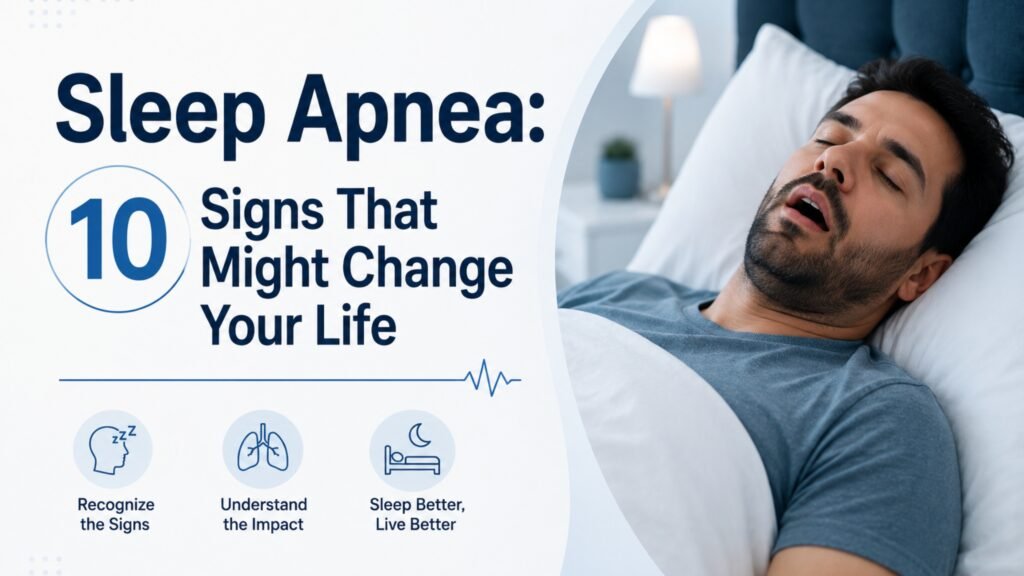
Most people think snoring is normal. After a long day at work, many of us ignore loud snoring, poor sleep, or waking up feeling tired. But sometimes, these are not just sleep problems—they could be signs of Sleep Apnea.
Sleep Apnea is a common sleep disorder in which breathing repeatedly stops and starts during sleep. These pauses may last for a few seconds and can happen many times throughout the night. As a result, your brain and body do not get enough oxygen, even if you sleep for 7–8 hours.
Many people live with sleep apnea for years without knowing they have it. The condition not only affects sleep quality but can also increase the risk of high blood pressure, heart disease, diabetes, and stroke if left untreated.
The good news is that early diagnosis and proper treatment can significantly improve your health and quality of life.
What Is Sleep Apnea?
Sleep Apnea is a condition where the airway becomes partially or completely blocked during sleep, causing breathing to stop for short periods.
The most common type is Obstructive Sleep Apnea (OSA), where the muscles in the throat relax too much and block the airway.
Another type is Central Sleep Apnea, which happens when the brain does not send proper signals to the muscles responsible for breathing.
Among these, obstructive sleep apnea is far more common and is seen in both adults and children.
10 Signs of Sleep Apnea You Should Never Ignore
1. Loud and Regular Snoring
Not everyone who snores has Sleep Apnea, but loud, frequent snoring is one of its most common signs.
If your family members complain that your snoring is unusually loud or happens every night, it may be worth getting evaluated.
Snoring that is interrupted by silent pauses or gasping sounds is especially concerning.
2. Breathing Stops During Sleep
Many people are unaware that their breathing stops while sleeping.
Usually, it is a spouse or family member who notices repeated pauses followed by choking or gasping.
This is one of the strongest warning signs of sleep apnea and should never be ignored.
3. Feeling Tired Even After Sleeping
Do you wake up feeling exhausted despite getting enough sleep?
People with Sleep Apnea often experience poor-quality sleep because their brain repeatedly wakes them up to restart breathing.
This leads to daytime fatigue, low energy, and poor concentration.
4. Morning Headaches
Frequent headaches after waking up may be linked to reduced oxygen levels during sleep.
These headaches usually improve as the day progresses but continue returning every morning.
If headaches are accompanied by loud snoring, it is important to consult a doctor.
5. Difficulty Concentrating
Poor sleep affects brain function.
People with Sleep Apnea often struggle to concentrate at work, forget small things, or have trouble making decisions.
Students may notice a decline in academic performance, while professionals may experience reduced productivity.
6. Daytime Sleepiness
One of the most common symptoms is excessive daytime sleepiness.
You may feel sleepy while watching television, attending meetings, reading, or even driving.
This increases the risk of road accidents and workplace injuries.
Persistent daytime sleepiness should always be evaluated.
7. Waking Up With a Dry Mouth
Many people with Sleep Apnea breathe through their mouth during sleep.
As a result, they often wake up with a dry mouth, sore throat, or bad breath.
Although these symptoms can have other causes, they are commonly associated with sleep apnea.
8. High Blood Pressure
Sleep apnea and high blood pressure are closely connected.
Repeated oxygen deprivation during sleep puts extra stress on the heart and blood vessels.
Many patients discover their sleep apnea only after struggling to control high blood pressure with medications.
Treating sleep apnea can also help improve blood pressure control.
9. Mood Changes and Irritability
Poor sleep affects emotional health.
People with untreated Sleep Apnea often become irritable, anxious, or depressed.
Lack of restful sleep can reduce patience, increase stress levels, and affect relationships with family and colleagues.
10. Difficulty Sleeping Through the Night
Many people with sleep apnea wake up several times without realising why.
Some wake up gasping for air, while others feel restless throughout the night.
Interrupted sleep prevents the body from entering deep, restorative sleep stages.
Who Is More Likely to Develop Sleep Apnea?
Although anyone can develop Sleep Apnea, certain factors increase the risk.
People who are overweight are more likely to experience airway blockage during sleep.
Smoking and alcohol consumption can relax throat muscles and worsen symptoms.
Individuals with enlarged tonsils, a small jaw, nasal blockage, or a family history of sleep apnea also have a higher risk.
Age is another contributing factor, although younger adults and children can also be affected.
How Is Sleep Apnea Diagnosed?
If your doctor suspects Sleep Apnea, a detailed medical evaluation will be performed.
You may be asked about your sleep habits, snoring history, daytime fatigue, and existing medical conditions.
The most common diagnostic test is a sleep study, also called polysomnography.
This test monitors breathing, oxygen levels, heart rate, and sleep patterns throughout the night.
The results help determine the severity of the condition and guide treatment.
Treatment Options for Sleep Apnea
Treatment depends on the severity and underlying cause.
Lifestyle modifications are often recommended for mild cases.
Doctors may advise weight loss, better sleep habits, and avoiding alcohol before bedtime.
For moderate to severe sleep apnea, CPAP (Continuous Positive Airway Pressure) therapy is considered one of the most effective treatments.
Some patients may benefit from oral appliances that keep the airway open during sleep.
In selected cases, ENT surgery may be recommended to remove enlarged tonsils, nasal blockages, or other structural causes contributing to airway obstruction.
How to Prevent Sleep Apnea
Although not every case can be prevented, healthy lifestyle habits can significantly reduce the risk of Sleep Apnea.
Maintaining a healthy body weight is one of the most effective preventive measures.
Regular exercise improves breathing and overall health.
Avoid smoking and limit alcohol intake, especially before bedtime.
Try sleeping on your side instead of your back, as this can help keep the airway open.
Managing allergies and nasal congestion also improves breathing during sleep.
If you snore regularly or experience daytime fatigue, do not ignore the symptoms. Early evaluation can prevent future complications.
Why Early Treatment Matters
Untreated Sleep Apnea affects much more than sleep.
Over time, it increases the risk of heart disease, stroke, diabetes, memory problems, and depression.
It can also reduce workplace performance, increase accident risk, and negatively impact relationships due to constant fatigue and poor sleep quality.
The earlier the condition is diagnosed, the easier it becomes to manage effectively.

Final Thoughts
Sleep Apnea is more than just loud snoring. It is a serious medical condition that can silently affect your heart, brain, and overall health.
If you notice symptoms such as loud snoring, breathing pauses during sleep, morning headaches, excessive daytime sleepiness, or persistent fatigue, it is important to seek medical advice instead of ignoring them.
Simple lifestyle changes, timely diagnosis, and appropriate treatment can dramatically improve your sleep quality and overall well-being.
Expert Care at Dr Ayushi ENT Clinic
At Dr Ayushi ENT Clinic, patients receive comprehensive evaluation and treatment for Sleep Apnea and other ENT-related sleep disorders. From advanced diagnosis to personalised treatment plans, Dr Ayushi focuses on helping patients breathe better, sleep peacefully, and enjoy a healthier, more energetic life. Early consultation can make a significant difference in preventing long-term complications and improving your quality of life.