
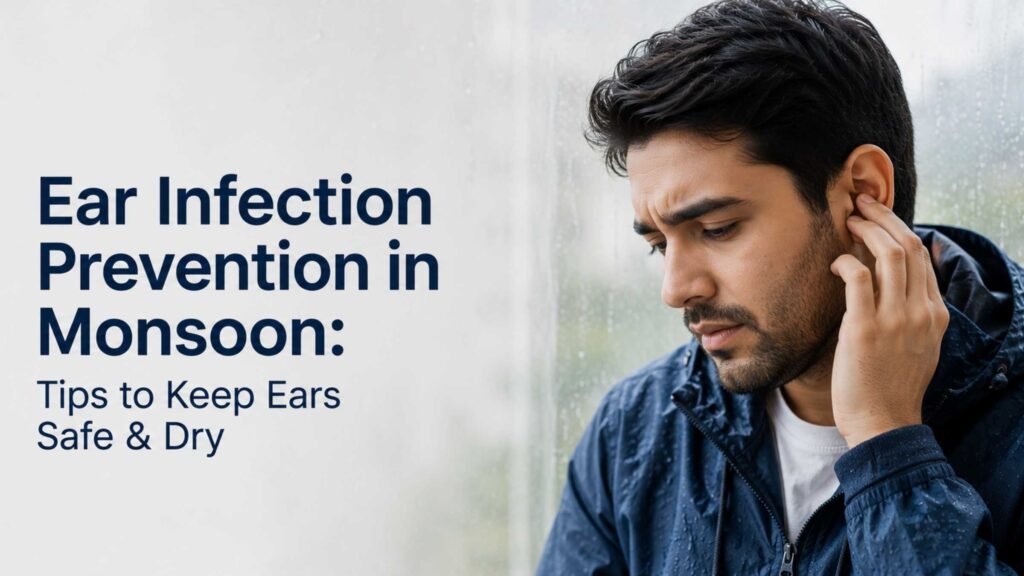
The monsoon season brings welcome relief from the summer heat, but it also creates the perfect environment for bacterial and fungal infections. While most people focus on coughs, colds, and seasonal flu during rainy weather, ear infections are another common health concern that often goes unnoticed.
The increased humidity, frequent exposure to rainwater, and moisture trapped inside the ear can increase the risk of infections in both children and adults. This is why Ear Infection Prevention in Monsoon becomes extremely important.
The good news is that a few simple precautions can help keep your ears healthy throughout the rainy season. In this guide, we’ll discuss why ear infections become more common during monsoon, their warning signs, and practical tips to protect your ears.
Why Are Ear Infections More Common During Monsoon?
Monsoon weather creates a warm and humid environment that encourages the growth of bacteria and fungi.
When water enters the ear canal and remains trapped, it creates ideal conditions for infection. This is especially common among children, swimmers, and people who frequently travel in the rain.
In addition, seasonal allergies, colds, and sinus infections can block the Eustachian tube, increasing the risk of middle ear infections.
This is one of the main reasons why ENT clinics often see a rise in ear-related complaints during the rainy season.
Common Symptoms of Ear Infection
Recognizing symptoms early is important for effective Ear Infection Prevention in Monsoon.
Some common warning signs include:
- Ear pain or discomfort
- Itching inside the ear
- A feeling of fullness in the ear
- Reduced hearing
- Ear discharge
- Ringing sounds in the ear
- Dizziness
- Fever in severe cases
Children may frequently touch or pull their ears, become irritable, or have difficulty sleeping.
Ignoring these symptoms can allow the infection to worsen and may require medical treatment.
Keep Your Ears Dry at All Times
One of the most effective methods for Ear Infection Prevention in Monsoon is keeping your ears dry.
If your ears get wet during rain or bathing, gently dry the outer ear with a soft towel.
Avoid leaving moisture trapped inside the ear canal.
Many people use cotton buds to dry their ears, but this can push moisture and earwax deeper inside. Instead, allow the ears to dry naturally whenever possible.
Be Careful While Swimming
Swimming pools can contain bacteria and fungi, especially during the rainy season.
If you swim regularly, consider using waterproof earplugs approved by your ENT specialist.
After swimming, tilt your head gently to allow excess water to drain out naturally.
Keeping ears dry after swimming is one of the simplest ways to reduce infection risk.
Avoid Inserting Objects Into Your Ears
Many people try to clean their ears using cotton buds, hairpins, matchsticks, or other objects.
This habit can damage the ear canal and increase the likelihood of infection.
The ear is naturally self-cleaning. In most cases, earwax does not need to be removed manually.
For effective Ear Infection Prevention in Monsoon, avoid inserting anything into the ear canal unless advised by an ENT specialist.
Manage Allergies and Sinus Problems
Monsoon often triggers allergies and sinus congestion.
When the nose and sinuses become blocked, pressure can build inside the ears. This may increase the risk of middle ear infections.
Managing allergies early and maintaining nasal hygiene can help keep the Eustachian tube functioning properly.
People who frequently suffer from sinus issues should be particularly cautious during the rainy season.
Strengthen Your Immunity
A strong immune system helps the body fight infections more effectively.
Simple lifestyle habits can support immunity, including:
- Eating fresh fruits and vegetables
- Drinking enough water
- Getting adequate sleep
- Regular exercise
- Managing stress
Good overall health plays a significant role in Ear Infection Prevention in Monsoon.
Protect Children’s Ears During Monsoon
Children are more vulnerable to ear infections because their Eustachian tubes are shorter and more prone to blockage.
Parents should ensure that children’s ears are dried properly after bathing or getting caught in the rain.
Avoid sending children to school with wet hair, as prolonged moisture can contribute to discomfort and infection risk.
If a child complains of ear pain, reduced hearing, or fever, prompt medical evaluation is important.
Avoid Self-Medication
Many people use over-the-counter ear drops without knowing the exact cause of their symptoms.
However, not every ear problem is caused by infection. Some symptoms may result from earwax buildup, allergies, or other conditions.
Using inappropriate medications can sometimes worsen the situation.
For safe Ear Infection Prevention in Monsoon, always seek professional medical advice if symptoms persist.
Pay Attention to Earwax
Earwax serves an important protective function by trapping dirt and preventing harmful particles from entering the ear.
However, excessive earwax combined with moisture can sometimes increase infection risk.
If you suspect earwax blockage, consult an ENT specialist instead of attempting removal at home.
Professional cleaning is safer and helps avoid injury.
When Should You Visit an ENT Specialist?
While mild discomfort may resolve on its own, certain symptoms require immediate attention.
You should consult an ENT specialist if you experience:
- Persistent ear pain
- Ear discharge
- Hearing loss
- Severe itching
- Recurring infections
- Dizziness or balance issues
- Fever accompanied by ear symptoms
Early diagnosis can prevent complications and speed up recovery.
Can Ear Infections Be Prevented Completely?
No prevention method offers a 100% guarantee, but following healthy ear care practices significantly reduces risk.
Consistent hygiene, keeping ears dry, avoiding unnecessary ear cleaning, and seeking timely medical care are among the best strategies for Ear Infection Prevention in Monsoon.
Most infections can be avoided with simple daily habits.
Why Monsoon Ear Care Matters
Many people ignore mild ear symptoms, assuming they will disappear on their own.
However, untreated infections can sometimes spread, cause prolonged discomfort, and affect hearing.
Monsoon is the ideal time to become more aware of ear health and adopt preventive measures.
A little extra care today can help prevent bigger problems tomorrow.
Final Thoughts
Ear Infection Prevention in Monsoon is all about protecting your ears from excess moisture, maintaining proper hygiene, and paying attention to early warning signs.
Simple habits such as drying your ears properly, avoiding cotton buds, managing allergies, and seeking timely medical advice can go a long way in keeping your ears healthy during the rainy season.
If you experience persistent ear discomfort, pain, itching, or hearing problems, do not ignore the symptoms. Early diagnosis and treatment can prevent complications and ensure better ear health.

Expert Care at Dr. Ayushi ENT Clinic
At Dr. Ayushi ENT Clinic, patients receive expert diagnosis and treatment for ear infections, hearing concerns, and seasonal ENT problems. Whether you are dealing with recurring ear infections or looking for guidance on Ear Infection Prevention in Monsoon, Dr. Ayushi provides personalized care to help you and your family enjoy a healthy monsoon season.